Personal loans are widely used for managing financial needs, but many borrowers are unaware of hidden personal loan charges that can increase the total cost of borrowing. In a growing metropolitan city like Chennai, many individuals apply for personal loans to manage expenses such as medical emergencies, education, weddings, home renovations, travel, or other financial needs.
One of the biggest reasons personal loans are popular is because they are unsecured loans, meaning borrowers do not need to pledge assets as collateral. Banks and financial institutions also promote personal loans with quick approval and minimal documentation, which makes them attractive for borrowers.
However, many borrowers make the mistake of focusing only on the interest rate and EMI amount when applying for a loan. The actual cost of a personal loan often includes several additional charges and service fees that are not always clearly highlighted during the application process.
These hidden personal loan charges can increase the overall cost of borrowing significantly. Understanding these charges before applying for a loan can help borrowers make better financial decisions and avoid unnecessary expenses.
Why Understanding Hidden personal Loan Charges Is Important
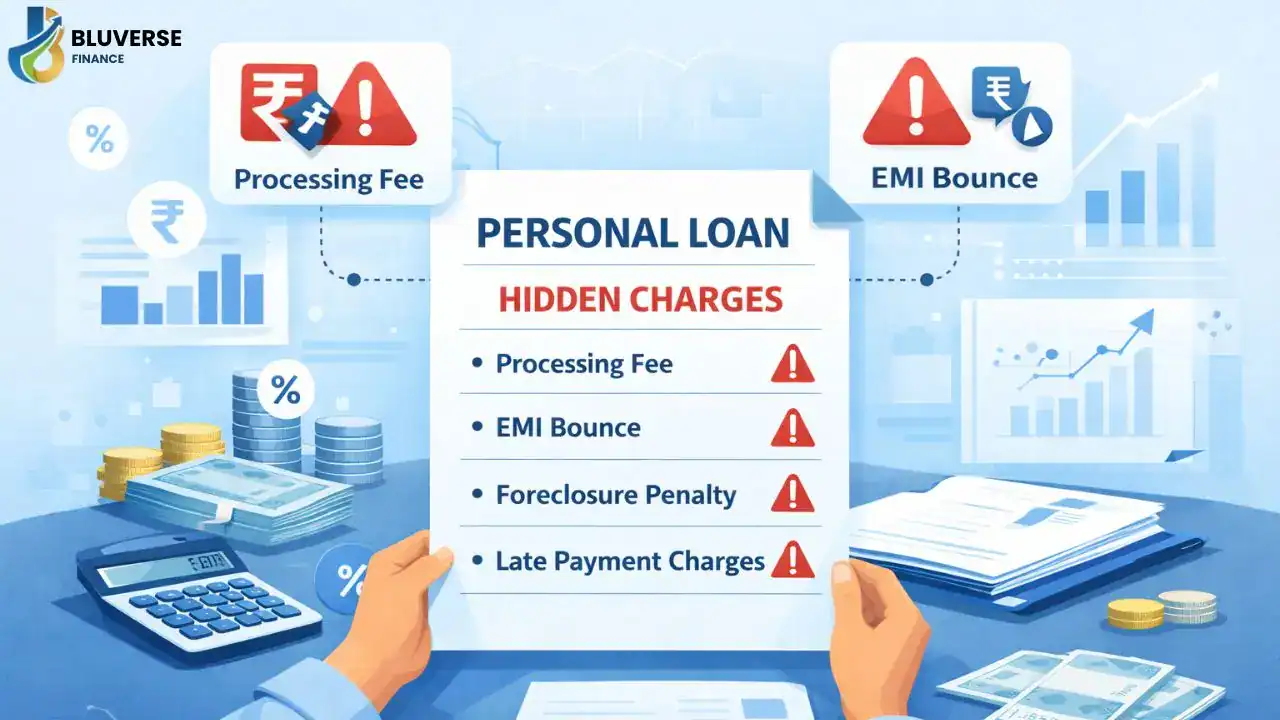
Before choosing a lender, it is important for borrowers to understand hidden personal loan charges such as processing fees, foreclosure penalties, documentation charges, and EMI bounce fees.
If borrowers ignore these additional charges, the total repayment amount may become much higher than expected.
Key reasons to understand hidden charges:
- Helps calculate the true cost of borrowing
- Allows borrowers to compare lenders effectively
- Prevents unexpected financial penalties
- Helps maintain better financial planning
Understanding these charges ensures borrowers can choose the most suitable loan option.
1. Processing Fee
The processing fee is one of the most common charges applied to personal loans. Lenders charge this fee to cover the administrative work involved in reviewing and approving a loan application.
What processing fee covers:
- Loan application review
- Credit score verification
- Document verification
- Loan agreement preparation
Important points to know:
- Usually calculated as a percentage of the loan amount
- Often non-refundable
- Sometimes deducted from the loan amount before disbursement
Borrowers should always check the exact processing fee before accepting a loan offer.
2. Prepayment Charges
Prepayment refers to paying a portion of the loan amount before the scheduled EMI tenure. Many borrowers choose to make prepayments when they have additional funds available.
While this may reduce interest payments, some lenders charge prepayment penalties.
Key points about prepayment charges:
- May apply when borrowers repay part of the loan early
- Designed to compensate lenders for lost interest income
- Often allowed only after a specific period of EMI payments
Before applying for a loan, borrowers should check whether prepayments are allowed and what charges may apply.
3. Foreclosure Charges
Foreclosure means closing the entire loan before the loan tenure is completed. This option is often used by borrowers who want to eliminate debt faster.
However, lenders may charge foreclosure fees when a borrower closes the loan early.
Important details about foreclosure:
- May apply when repaying the full outstanding loan amount
- Some lenders enforce a lock-in period before foreclosure is allowed
- Charges are typically calculated on the remaining balance
Understanding foreclosure terms can help borrowers plan their repayment strategy more effectively.
4. Late Payment Penalty
Late payment penalties apply when borrowers fail to pay their EMI on time. These penalties are designed to encourage timely payments and compensate lenders for payment delays.
Consequences of late EMI payments:
- Additional financial penalties
- Increased interest on overdue amount
- Negative impact on credit score
Tips to avoid late payment charges:
- Set automatic EMI deductions
- Maintain sufficient balance in the bank account
- Track EMI due dates regularly
Maintaining payment discipline is essential to avoid these charges.
5. EMI Bounce Charges
EMI bounce charges occur when the scheduled EMI deduction fails due to insufficient funds in the borrower’s bank account.
This situation may result in penalties from both the lender and the bank.
Common causes of EMI bounce:
- Insufficient bank balance
- Technical payment failure
- Incorrect bank account details
Risks of frequent EMI bounces:
- Additional financial penalties
- Lower credit score
- Difficulty getting future loans
Ensuring adequate funds in the bank account can help prevent these charges.
6. Documentation Charges
Documentation charges are applied by lenders to cover the administrative work involved in preparing and verifying loan documents.
These charges may include:
- Preparing loan agreements
- Identity and address verification
- Record maintenance and filing
Although documentation charges are usually smaller compared to other fees, they still contribute to the overall cost of the loan.
Borrowers should always confirm whether documentation fees are charged separately or included within the processing fee.
7. GST on Loan Charges
Loan-related service fees attract Goods and Services Tax (GST). This tax applies to several charges associated with personal loans.
Charges that usually include GST:
- Processing fees
- Documentation charges
- Late payment penalties
- Foreclosure charges
Since GST increases the amount payable for these services, borrowers should consider tax implications when calculating the total cost of the loan.
8. Loan Cancellation Charges
Sometimes borrowers change their mind after the loan has been approved but before the funds are disbursed. In such cases, lenders may apply loan cancellation charges.
Loan cancellation fees may apply when:
- Borrower withdraws the loan request after approval
- Documentation process has already been completed
- Administrative work has already been performed by the lender
Borrowers should confirm cancellation policies before applying for a loan.
9. Loan Statement Charges
Loan statements provide important information about the borrower’s loan account, including payment history and outstanding balance.
While many lenders provide digital statements free of charge, some may charge fees for physical copies or detailed reports.
Loan statements help borrowers:
- Track outstanding balance
- Review EMI payments
- Monitor repayment progress
Borrowers should check whether statement requests involve additional charges.
How Chennai Borrowers Can Avoid Hidden Loan Charges
Borrowers can reduce unnecessary loan costs by following a few important financial practices.
Smart borrowing strategies:
- Compare multiple lenders before choosing a loan
- Review the complete fee structure, not just interest rates
- Carefully read the loan agreement before signing
- Ask lenders about all possible penalties and charges
- Maintain timely EMI payments throughout the loan tenure
Making informed decisions helps borrowers avoid unnecessary financial stress.
Conclusion
Personal loans can be extremely helpful during financial emergencies or major life events. However, borrowers must understand that the actual cost of a personal loan includes more than just the interest rate.
Hidden charges such as processing fees, foreclosure penalties, documentation charges, and EMI bounce fees can increase the total repayment amount significantly.
By carefully reviewing the loan agreement, comparing lenders, and understanding all applicable charges, borrowers in Chennai can make better financial decisions and avoid unnecessary costs.
Being an informed borrower ensures a smoother loan experience and better long-term financial stability.
Get Your Questions Answered
Hidden charges in personal loans are additional fees that lenders apply apart from the interest rate. These charges may include processing fees, foreclosure charges, prepayment penalties, EMI bounce charges, documentation fees, and late payment penalties. These costs can increase the total repayment amount of the loan.
Yes, borrowers can close their personal loan before the tenure ends through foreclosure. However, some lenders may charge foreclosure fees for early loan closure. It is important to check the lender’s foreclosure policy before applying for the loan.
Yes, several loan-related charges such as processing fees, documentation charges, and service fees attract Goods and Services Tax (GST). Borrowers should consider these taxes while calculating the total cost of the loan.
Comparing lenders helps borrowers find better interest rates, lower processing fees, and fewer hidden charges. This allows borrowers to choose a loan that best suits their financial needs.
Before signing a loan agreement, borrowers should check the interest rate, processing fee, foreclosure policy, prepayment charges, EMI penalties, and other service fees mentioned in the terms and conditions.