Introduction
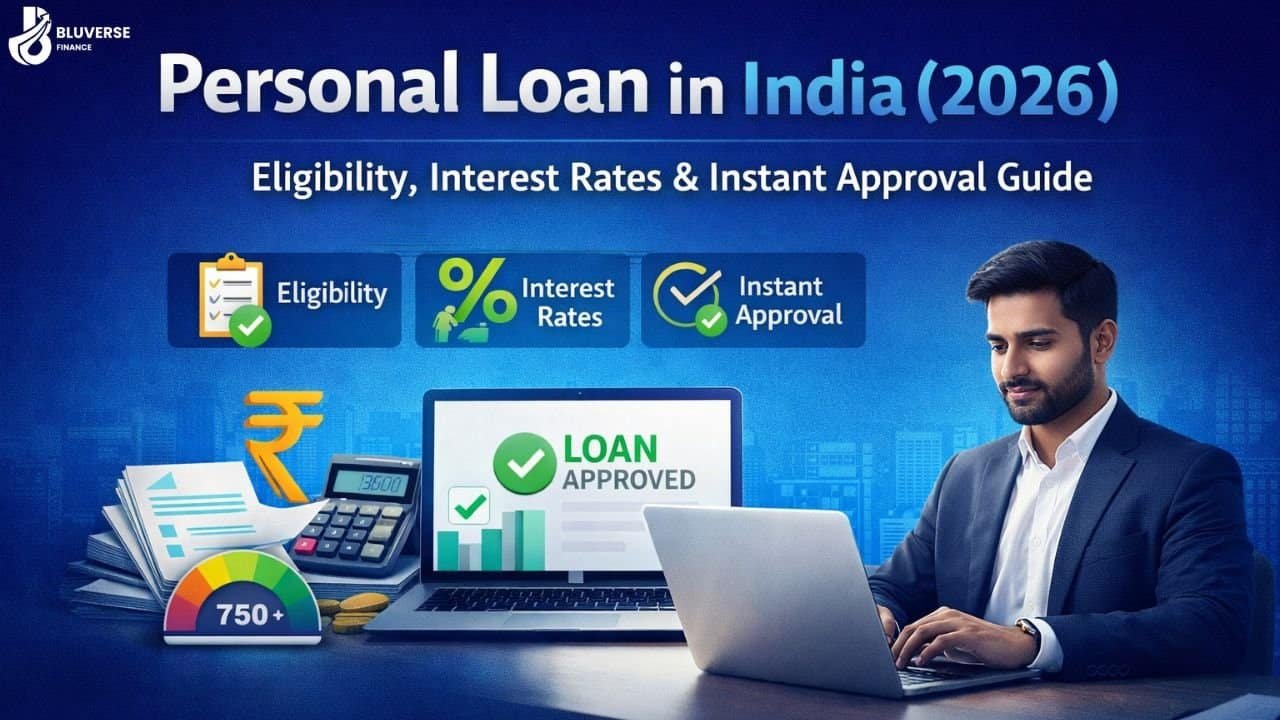
Personal loans have become one of the most popular financial solutions in India for managing urgent expenses such as medical emergencies, education, travel, or business needs. Since these loans are unsecured, you do not need to provide any collateral, which makes the process faster and more convenient.
However, many borrowers face issues like loan rejection, high interest rates, or unexpected charges due to a lack of proper understanding. This guide will help you understand everything about personal loans in India, including eligibility criteria, interest rates, required documents, credit score requirements, and how to get faster approval.
What is a Personal Loan?
A personal loan is an unsecured loan offered by banks and NBFCs (Non-Banking Financial Companies) that can be used for multiple purposes. Unlike home or car loans, there are no restrictions on how you use the money.
Key features of personal loans in India:
- No collateral required
- Quick approval process
- Flexible usage
- Fixed monthly EMI repayment
Loan details typically include:
- Loan amount: ₹10,000 to ₹40 lakhs
- Tenure: 12 months to 60 months
- Interest rate: 10% to 24% per annum
Personal Loan Interest Rates in India (2026)
Interest rates vary depending on your profile and lender. Banks usually offer lower rates compared to NBFCs, but their approval process may be stricter.
Factors affecting interest rates:
- CIBIL score
- Monthly income
- Employment type
- Existing loans
- Relationship with the lender
Typical interest rate range:
| Lender Type | Interest Rate |
|---|---|
| Banks | 10% – 16% |
| NBFCs | 14% – 24% |
Choosing the right lender is important. If your priority is a lower interest rate, banks are a better option. If you need quick approval, NBFCs may be more suitable.
Minimum CIBIL Score for Personal Loan
Your CIBIL score plays a major role in determining whether your loan will be approved.
- 750 and above: High approval chances with low interest rates
- 650 to 749: Moderate approval chances
- Below 650: Higher chances of rejection
Your credit score plays a major role in loan approval. To understand the exact requirement, read our guide on minimum CIBIL score for personal loan in India
Personal Loan Eligibility Criteria
To apply for a personal loan in India, you must meet certain eligibility conditions.
Basic eligibility requirements:
- Age between 21 and 60 years
- Stable source of income
- Salaried or self-employed
- Good credit history
For salaried individuals:
- Minimum monthly income of ₹15,000 to ₹25,000
- Employment with a recognized company
For self-employed individuals:
- Stable business income
- Filed Income Tax Returns (ITR)
Your loan amount mainly depends on your income and repayment capacity. Learn more in how much personal loan you can get based on salary in India.
Documents Required for Personal Loan
Submitting accurate documents is essential for faster approval.
Common documents required:
- Identity proof (Aadhaar card, PAN card)
- Address proof
- Salary slips (last 3 months)
- Bank statements (last 6 months)
- Income Tax Returns (for self-employed)
- Passport-size photographs
Submitting correct documents can increase your approval chances. Check the full checklist of documents required for personal loan in Chennai.
How to Get Personal Loan Approved Faster
Getting quick approval depends on how well you prepare your application. Here are some effective strategies:
- Maintain a high CIBIL score
A score above 750 increases approval chances and reduces interest rates. - Reduce existing liabilities
Too many ongoing loans or credit card dues can negatively impact your eligibility. - Choose the right lender
NBFCs generally have a faster approval process and more flexible criteria. - Submit accurate information
Ensure all details in your application are correct and match your documents. - Apply for a suitable loan amount
Do not apply for an amount beyond your repayment capacity.
Following these steps can significantly improve your chances of approval.
Common Reasons for Personal Loan Rejection
Understanding why loans get rejected can help you avoid mistakes.
Major reasons include:
- Low credit score
- Irregular income
- High debt-to-income ratio
- Errors in application
- Insufficient documentation
Many applicants face rejection due to simple mistakes. Read why personal loans get rejected in India and how to fix them.
Bank vs NBFC: Which is Better?
Choosing between a bank and an NBFC depends on your needs.
| Feature | Banks | NBFCs |
|---|---|---|
| Interest Rate | Lower | Higher |
| Approval Speed | Slower | Faster |
| Eligibility Criteria | Strict | Flexible |
Banks are suitable for borrowers with strong financial profiles. NBFCs are better for those who need quick approval or have lower credit scores.
Hidden Charges in Personal Loans
Many borrowers focus only on interest rates and ignore additional charges, which can increase the total cost of the loan.
Important charges to check:
- Processing fees
- Late payment charges
- Prepayment or foreclosure charges
- EMI bounce charges
Before applying, always check extra costs. Learn about hidden personal loan charges you should never ignore.
Personal Loan in Chennai
If you are applying for a personal loan in Chennai, you have access to a wide range of lenders, including banks, NBFCs, and private financial institutions.
Advantages of applying in Chennai:
- Faster processing through local lenders
- Availability of multiple loan options
- Flexible eligibility criteria
Working with a trusted financial advisor can also help you compare options and choose the best loan.
Conclusion
A personal loan can be a useful financial tool when used responsibly. It provides quick access to funds without requiring collateral, making it suitable for various needs.
To get the best loan deal, focus on maintaining a good credit score, choosing the right lender, and understanding all charges involved. Proper planning and awareness can help you avoid common mistakes and ensure a smooth borrowing experience.
Before applying, always compare multiple options and choose a loan that fits your financial situation.
Frequently Asked Questions
Lenders usually offer a loan amount up to 10–20 times your monthly income. Your eligibility also depends on existing EMIs, credit score, and job stability.
Yes, some NBFCs provide personal loans without salary slips by considering bank statements, alternative income proof, or business income for self-employed individuals.
Common documents include Aadhaar card, PAN card, address proof, salary slips, bank statements, and ITR for self-employed applicants.
Banks offer lower interest rates but have stricter eligibility. NBFCs provide faster approval and flexible criteria but may charge higher interest.
Yes, timely EMI payments improve your credit score, while missed or delayed payments can reduce it significantly.